
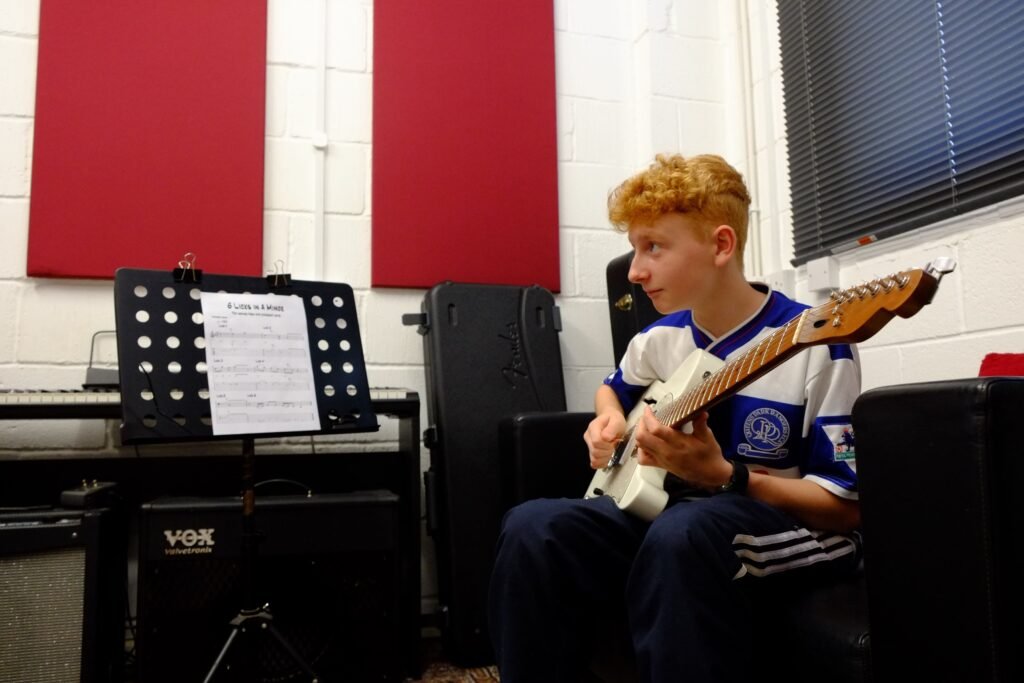
What to Look For in a Guitar Teacher
The signs of a great guitar tutor, the red flags to avoid, and the basics every student and parent should check.
“How do I find a good guitar teacher?” It’s a question we see online all the time, and one people often ask us at Guitar Academy in Petersfield and Chichester.
We also hear plenty of stories from new students about tutors they didn’t get on with. Those stories have taught us a lot about what makes a guitar teacher worth your time and money. Here’s what to look for.
The Short Answer
A good guitar teacher is invested in your progress, gets you playing quickly, coaches you through things in the lesson rather than burying you in homework, and teaches at the right level for you. On top of that, they should be DBS checked, and ideally insured and safeguarding trained.
Signs of a Good Guitar Teacher
These are the qualities we’d look for in any guitar tutor, whether you’re learning yourself or finding lessons for your son or daughter.
1. They’re Invested in You
Many guitar teachers also gig and perform, and that real-world experience can make them brilliant tutors. But they still need to dedicate time to your development. If a tutor regularly cancels, lets you down at the last minute, or turns up without any kind of plan, they’re not fully invested in teaching you. Sometimes a dedicated tutor beats one who treats teaching as a side hustle.
2. They Get You Playing Quickly
The main focus of a guitar lesson should be you playing the guitar. Of course there’s time for explaining concepts, but a good tutor gets you plugged in and playing as soon as possible. It doesn’t have to be perfect. Playing is the number one priority.
3. They Coach You, Like a Personal Trainer
The best guitar teachers work like a gym coach: they teach you a concept, then get you applying it straight away. A pile of handouts and homework might feel like value, but being coached through achieving what you want in the lesson is far more effective than being sent away with work you’ll struggle to do alone.
4. They Teach at Your Level
Good tutors have a plan, even if it’s not written down. They know how to break concepts into manageable chunks and build your skills gradually, so you always have solid foundations before moving on to more advanced topics.
Red Flags to Watch Out For
- Frequent cancellations or last-minute changes. A sign that teaching isn’t their priority.
- No plan for your lessons. If every lesson feels improvised, your progress will be too.
- Talking more about their music than yours. Building a rapport is lovely, but the lesson should be about developing you as a musician. If a tutor makes it clear they’re only teaching until they “make it big”, they’re unlikely to be fully committed to your lessons.
- Loads of homework, little playing in the lesson. Volume of material isn’t the same as progress.
- Concepts way above your level. Teaching whatever they happen to be interested in, rather than what you need next.
A Story We Hear Far Too Often
A new student came to us recently because he wasn’t getting on with his previous guitar tutor. That tutor had been teaching him lots of scales and modes, and the concepts were going completely over his head.
He was genuinely interested in scales, but it quickly became clear he hadn’t got the basics down yet. He couldn’t play along to a simple track and didn’t know his open position chords. He’d been taught advanced material before he had the foundations to use it.
We hear stories like this surprisingly often. It usually comes down to a lack of planning or a lack of understanding of how to teach. A good tutor gets the foundations right first.
That said, exploring an advanced topic isn’t always a bad thing. If you ask about something like modes and your tutor spends a lesson or two on it, that’s fine. It can even plant the seed for future learning. The red flag is a tutor who only teaches advanced material and never builds the foundations.
The Essentials: Safety and Professionalism
Beyond teaching ability, there are some basics every student and parent should check:
- A DBS check. The DBS check (formerly known as a CRB check) is a criminal records check. Always look for a DBS-checked tutor, especially for children.
- Insurance. A professional tutor should be properly insured.
- Safeguarding training. A big plus for anyone teaching young people.
- Clear policies. If you’re learning at a music school or centre, check it has policies covering things like complaints and safeguarding.
- A safe, tidy space. The teaching room or facility should be safe, clean and well looked after.
Parents: Ask to Sit In
If you’re looking for lessons for your son or daughter, don’t be afraid to ask to sit in on the first lesson, or every lesson if you’d like. Most good tutors will be more than happy for you to join.
For very young children, most good tutors will actually want a parent in the room. For students under seven, it’s simply good practice.
Looking for a Guitar Teacher in Petersfield or Chichester?
🎸 Lessons built around you
At Guitar Academy, we teach the way this article describes. We get you playing from the first lesson, coach you through new skills in the room rather than sending you home with a pile of homework, and build your foundations step by step at a pace that suits you.
Whether you’re a complete beginner, returning to the guitar, or booking lessons for your child, we’d love to help.
Frequently Asked Questions
What makes a good guitar teacher?
A good guitar teacher is invested in your progress, gets you playing quickly, coaches you through new skills during the lesson, and teaches at the right level for you, building strong foundations before moving on.
What are the red flags in a guitar teacher?
Watch out for frequent cancellations, no lesson plan, a tutor who talks more about their own music than your progress, too much homework with little playing in the lesson, and concepts that are far above your level.
Should a guitar teacher be DBS checked?
Yes. A DBS check (formerly a CRB check) is a criminal records check, and you should always look for a DBS-checked tutor, especially for children. Insurance and safeguarding training are valuable extras.
Can I sit in on my child’s guitar lesson?
Yes. Most good tutors are happy for parents to sit in, and for children under seven they will usually want you in the room.
How much homework should a guitar teacher give?
Not too much. The biggest gains come from being coached through new skills in the lesson. Lots of handouts and homework you can’t achieve on your own rarely help you improve.
Our Verdict
Look for a guitar teacher who gets you playing, acts as a coach, doesn’t overload you with homework, and teaches at your level. Then check the essentials: a DBS check, and ideally insurance and safeguarding training. And if you’re a parent, never be afraid to ask to sit in.
If in doubt, reach out. We’re always happy to help. Find out more about our one-to-one guitar lessons in Petersfield, kids’ guitar lessons and group lessons in Chichester, or read our tips on helping your child practise without nagging.
Guitar Academy offers one-to-one and group guitar lessons in Petersfield and Chichester for children, teens and adults of all abilities.
