
Acoustic, Classical or Electric: What’s the Best Guitar for a Child?
Honest advice from the tutors at Guitar Academy on choosing the right first guitar for your son or daughter.
“Should my child start on an acoustic, a classical or an electric guitar?” It is one of the questions we get asked most often by parents at Guitar Academy in Petersfield and Chichester — and the answer surprises a lot of people.
The guitar many shops steer parents towards for young beginners is a classical (nylon-string) guitar. In our experience, for most children it does more harm than good. Here is why — and what we recommend instead.
The Short Answer
For most children who want to play rock, pop, blues, indie or any other contemporary style, the best guitar for a child is an electric guitar, followed by a steel-string acoustic with a slim neck. A classical guitar only makes sense if your child specifically wants to learn classical music.
Why a Classical Guitar Can Hold Young Learners Back
Let’s be clear first: if your son or daughter wants to learn classical music, they should start on a classical guitar. That is the right tool for the job.
But if they are inspired by the music they hear every day — blues, rock, pop, jazz and the other contemporary genres — a classical guitar is more of a hindrance than a help. The reason is simple: classical guitars have very chunky necks, with a wide, flat fretboard. Children have small hands, and many simply cannot wrap their fingers around that neck comfortably. That puts them at a disadvantage from day one.
You will often hear that classical guitars are “easier for kids” because nylon strings are softer to press down. That part is true — the strings are softer. But it does not help much if your child can’t comfortably reach the strings in the first place. In our experience, the size of the neck matters far more than the softness of the strings.
Why an Electric Guitar Is Often the Best First Guitar for Kids
Yes, we love electric guitars — but this is not just bias. Having taught hundreds of young players, we genuinely believe an electric guitar is a brilliant place for most children to start:
- Lighter strings. Electric guitars usually use thinner strings than steel-string acoustics, so they are easier to press down and kinder to young fingertips.
- Less pressure needed. On an acoustic you really have to put some effort into fretting a note. On an electric you don’t have to press nearly as hard, which means fewer sore fingers and less frustration.
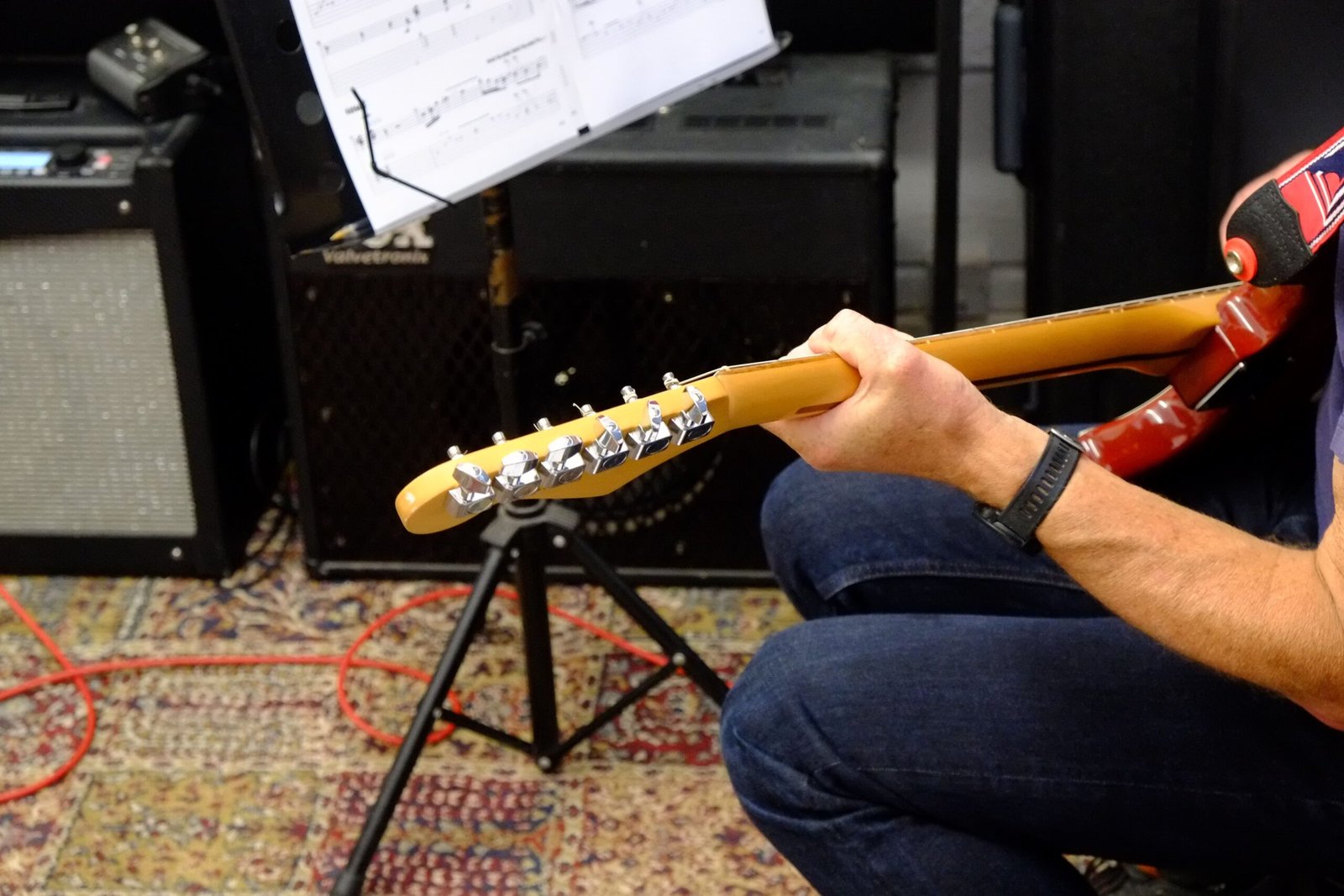
- Slimmer necks. Electric guitar necks tend to have a much thinner profile — ideal for small hands.
- They sound like the music kids love. Playing songs that sound like the records is a huge motivator to keep practising.
⚠️ Just remember that an electric guitar needs an amplifier. A small practice amp is all you need at home — or look out for a starter pack that includes one.
What If My Child Wants an Acoustic Guitar?
Fair enough — if your child is set on an acoustic, go for it. Steel-string acoustics come in half-size, three-quarter size and full size, so there is something to suit most ages.
Our advice is to choose a brand known for a slim neck profile. A budget-friendly range we rate highly is EastCoast, sold by Andertons in Guildford. You can get a really good quality EastCoast guitar for around £100–£130: they look great, sound good, and we have one in the studio ourselves.
Most importantly, always try a steel-string acoustic before you buy. Have your child sit with it and check they can actually press the strings down. If they struggle, an electric may be the better starting point.
The Guitars We Recommend for Children
Here are the brands we regularly recommend to parents at Guitar Academy, from budget-friendly to premium. Prices are a guide only and may change.
Harley Benton — Best Value
Our top pick for value. Harley Benton electric guitars start from around £77, and they are genuinely good quality for the money. We have several in the studio and our students love them. Honestly, we have seen £200–£300 guitars that play worse. Harley Benton also makes smaller, short-scale models for younger children.
EastCoast (Andertons) — Great for Beginners
Andertons’ own EastCoast range includes electric and acoustic guitars designed for beginners, with comfortable necks and sensible prices. A great option if you would like to try a guitar in person at the Andertons store in Guildford.
Ibanez miKro — Premium Short-Scale Option
If your child needs a smaller electric guitar and you would like a more premium brand, the Ibanez miKro series is excellent. It is more expensive than our other recommendations, so bear that in mind, but it is a really well-made guitar for smaller players.
Jackson Dinky — The Cool Factor
Another more premium choice that is available in a smaller size. Jackson guitars look very cool — and a guitar your child is excited to pick up is a guitar they will practise on.
Getting the Size Right
Whatever type of guitar you choose, size matters. A guitar that is too big is just as discouraging as one with a chunky neck. As a rough guide, younger children usually need a half or three-quarter size, while many children aged around 12 and over can manage a full-size guitar. Our beginner’s guide to choosing your first guitar includes a full age-to-size chart.
Every child is different, though, so always check the size in person before you buy.
Try Before You Buy at Guitar Academy
🎸 Not sure which guitar is right? Come and try one
Anyone is welcome to come into Guitar Academy and try out a guitar before committing to buy. We are always happy to give free, honest advice on what we have seen in the marketplace and what we think is worth your money.
Still unsure? Our guitar hire scheme from around £30 a month lets your child get started and find out what suits them before you spend money on a guitar of your own.
Already learning with another teacher? Ask them — they will usually have a guitar your child can try.
Frequently Asked Questions
Is a classical guitar good for a child beginner?
Only if your child wants to learn classical music. The soft nylon strings are easy to press, but the wide, chunky neck is hard for small hands to get around, which can make learning contemporary styles harder than it needs to be.
Is electric guitar easier than acoustic for kids?
For most children, yes. Electric guitars usually have lighter strings that need less pressure, plus slimmer necks — both of which make life easier for small hands.
How much should I spend on a child’s first guitar?
You don’t need to spend a fortune. Good beginner electrics from brands like Harley Benton start from around £77, and good quality beginner guitars from ranges like EastCoast are available from around £100–£130. Price is not everything — some expensive guitars play worse than well-made budget models.
Can my child try a guitar before we buy one?
Yes. You are welcome to visit Guitar Academy in Petersfield or Chichester to try a guitar, and our hire scheme lets your child play for a while before you commit to buying.
Our Verdict
For most young learners, our personal recommendation is an electric guitar. If your child prefers an acoustic, choose a steel-string model with a slim neck and try it first. Save the classical guitar for children who want to learn classical music. And whatever you choose, check the size before you buy.
If in doubt, reach out — we are always happy to help. Find out more about our kids’ guitar lessons in Petersfield and group lessons in Chichester, or get in touch for free advice.
Guitar Academy offers one-to-one and group guitar lessons in Petersfield and Chichester for children, teens and adults of all abilities.
